
Breast Cancer in Jamaica: What Every Woman Needs to Know
Jamaica has one of the highest breast cancer mortality rates in the Caribbean. The good news: most of these deaths are preventable with early detection. NHEF is committed to making sure every Jamaican woman has access to the care that saves lives.

THE REALITY
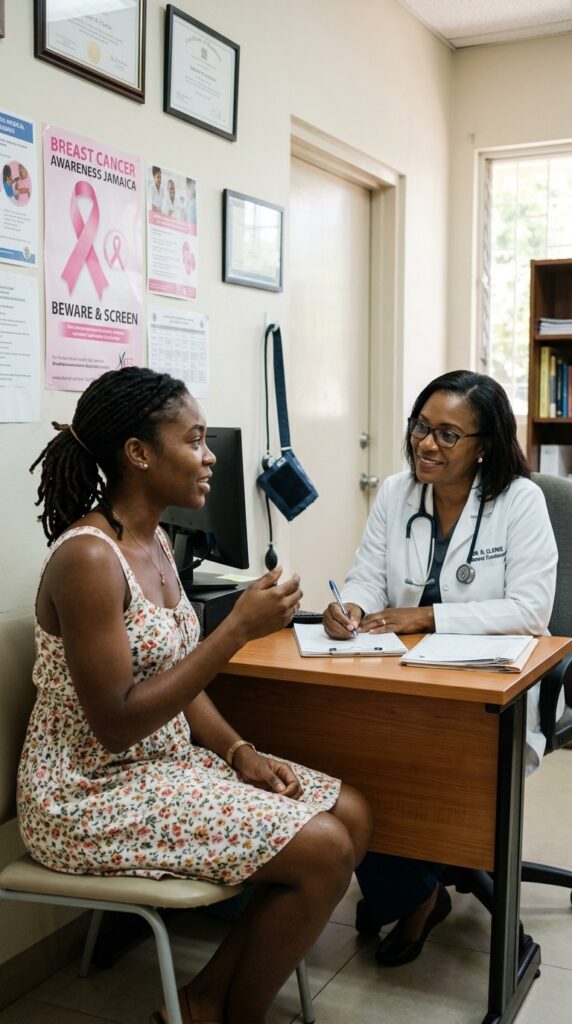
Breast Cancer in Jamaica: The Numbers That Demand Our Attention
Breast cancer is the most commonly diagnosed cancer among Jamaican women and the leading cause of cancer-related death in our female population. These are not abstract statistics. They represent daughters, mothers, grandmothers, and community leaders whose lives are cut short — often because the disease was found too late.
Here is what the data tells us:
- 1,327 new breast cancer cases were recorded in Jamaica in 2022, representing 35% of all cancers diagnosed in women. (Source: GLOBOCAN 2022 / Global Cancer Observatory, WHO/IARC)
- 684 Jamaican women died from breast cancer in 2022 alone. (Source: GLOBOCAN 2022)
- 71.1 per 100,000 is Jamaica's age-standardized breast cancer incidence rate — the highest in the Caribbean. (Source: GLOBOCAN 2022)
- 35.2 per 100,000 is Jamaica's age-standardized breast cancer mortality rate — also among the highest in the Caribbean. (Source: World Cancer Research Fund / GLOBOCAN 2022)
- 40% of Jamaican women with breast cancer present with locally advanced disease — meaning the cancer has already spread significantly before it is detected. (Source: Jamaica Gleaner / Kingston Public Hospital data)
- 54 years is the average age of breast cancer diagnosis in Jamaica — eight years younger than the United States average of 62 years. (Source: Jamaica Gleaner, October 2024)
- 60% of women presenting with breast cancer at Kingston Public Hospital were between the ages of 25 and 59. (Source: Kingston Public Hospital data, reported Jamaica Gleaner 2024)
Jamaica currently has no national breast cancer screening programme. This single gap is one of the most significant contributors to late-stage diagnosis and preventable death.
PREVENTION
Prevention: What You Can Do Starting Today
Prevention begins with knowledge and lifestyle. While not all breast cancers can be prevented, research consistently shows that certain choices significantly reduce risk.
Know your risk factors:
- A family history of breast cancer (particularly a mother, sister, or daughter)
- Age — risk increases after 40
- Dense breast tissue
- Obesity or being overweight, especially after menopause
- Physical inactivity
- Excessive alcohol consumption
- Hormone replacement therapy used long-term
- Not breastfeeding
Steps every woman can take:
1. Move your body. Regular physical activity — even 30 minutes of moderate exercise most days — has been shown to reduce breast cancer risk. Walk. Dance. Swim. Just move.
2. Maintain a healthy weight. Excess body fat, particularly after menopause, increases estrogen levels and breast cancer risk. A balanced, plant-forward diet rich in fruits, vegetables, and whole grains supports healthy weight management.
3. Limit alcohol. Even moderate alcohol consumption increases breast cancer risk. If you drink, do so in moderation.
4. Breastfeed if you are able. Breastfeeding for 12 months or more has been associated with a modest reduction in breast cancer risk.
5. Know your body. Perform monthly breast self-examinations. Become familiar with how your breasts look and feel so you can notice changes early.
6. Talk to your doctor. If you have a family history of breast cancer, speak with your healthcare provider about your personal risk and what screening schedule is right for you.
DETECTION
Early Detection: The Single Most Powerful Tool We Have
When breast cancer is detected early — at Stage I — the five-year survival rate is over 90%. When it is detected late — at Stage IV — that survival rate drops to approximately 28%. Early detection is not just important. It is the difference between life and death.
The three pillars of early detection:
1. Breast Self-Examination (BSE)
Every woman should examine her own breasts monthly, ideally 7 to 10 days after the start of her menstrual period. Look for:
- A new lump or thickening in the breast or underarm
- Changes in breast size or shape
- Dimpling or puckering of the skin
- Nipple discharge, inversion, or changes
- Redness, warmth, or swelling
- Pain that does not go away
If you notice any change — see a doctor. Do not wait.
2. Clinical Breast Examination (CBE)
A clinical breast examination performed by a trained healthcare professional should be part of every woman’s routine health check. NHEF’s Adopt-A-Clinic Programme is working to ensure that community health centres across Jamaica are resourced to provide this level of basic but critical care.
3. Mammography
A mammogram is an X-ray of the breast and is the gold standard for detecting breast cancer before symptoms appear. Jamaica’s National Screening Guidelines recommend mammography screening — however, access to mammography outside of Kingston remains limited.
NHEF is committed to advocating for and supporting the expansion of mammography access across Jamaica, particularly in rural and underserved communities.
Know the warning signs:
- A painless lump in the breast or underarm (pain does not rule out cancer)
- Swelling in part or all of the breast
- Skin irritation or dimpling
- Breast or nipple pain
- Nipple retraction (turning inward)
- Redness, scaliness, or thickening of the nipple or breast skin
- Nipple discharge other than breast milk
Important note for Jamaican women: Research shows that a fear of diagnosis and a fatalistic approach to breast cancer are significant barriers to screening uptake in Jamaica. Knowing about breast cancer does not cause it. Getting screened saves lives. The earlier you know, the more options you have.
TREATMENT & CURE
Treatment: Understanding Your Options
A breast cancer diagnosis is not a death sentence. With timely diagnosis and appropriate treatment, breast cancer is one of the most treatable cancers. Treatment depends on the type, stage, and molecular characteristics of the cancer.
Standard treatment options include:
Surgery
Lumpectomy (removal of the tumour) or mastectomy (removal of the breast) depending on the stage and spread of the cancer.
Radiation Therapy
Uses high-energy rays to destroy remaining cancer cells after surgery. Lumpectomy (removal of the tumour) or mastectomy (removal of the breast) depending on the stage and spread of the cancer.
Chemotherapy
Systemic drug treatment that targets cancer cells throughout the body. Often used before surgery (neoadjuvant) to shrink tumours or after (adjuvant) to reduce recurrence risk.
Hormone Therapy
For hormone receptor-positive breast cancers (the most common type), hormone therapy blocks estrogen from fueling cancer cell growth.
Targeted Therapy
For HER2-positive breast cancers, targeted drugs attack specific proteins that promote cancer growth.
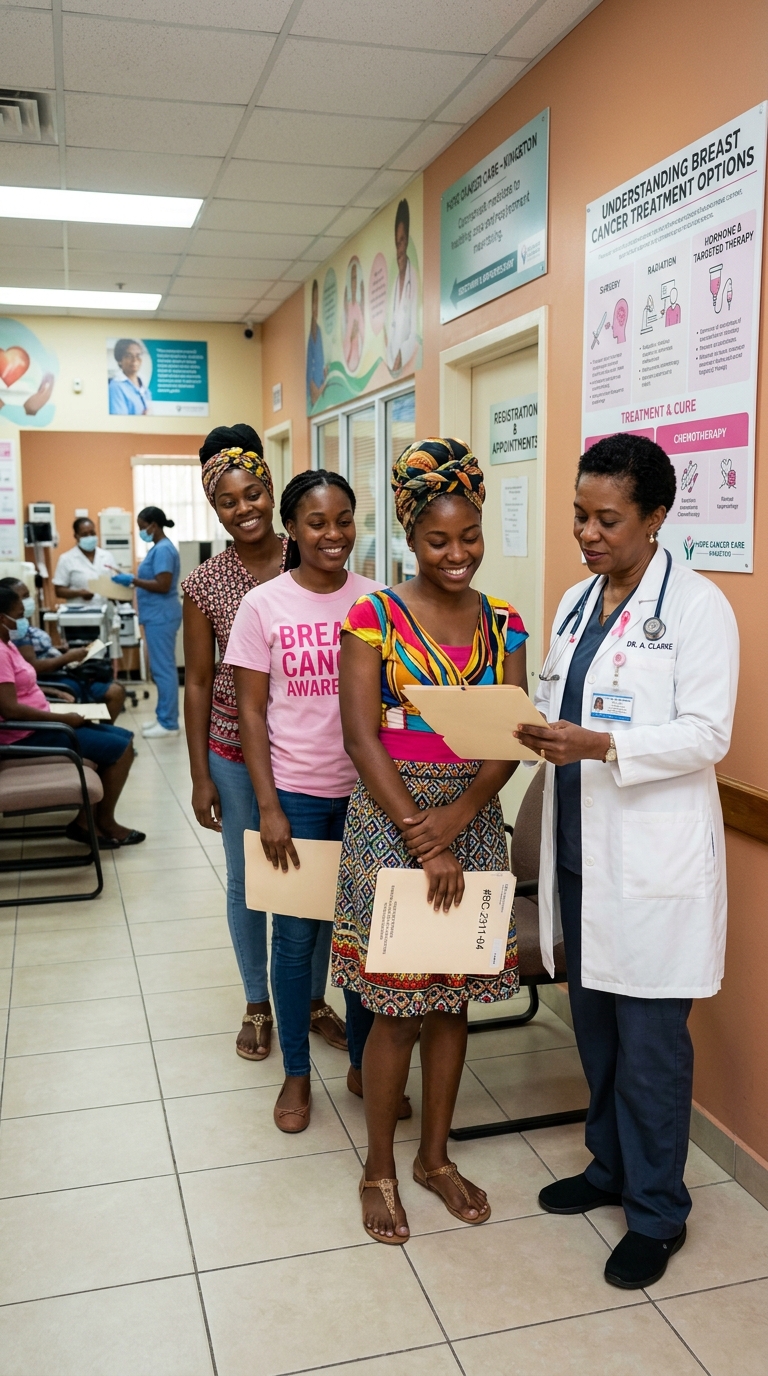
An important note about breast cancer in Jamaica:
Research published in 2025 found that Jamaican women have a higher prevalence of triple-negative breast cancer (TNBC) — a particularly aggressive subtype that does not respond to hormone therapy or HER2-targeted treatments and requires chemotherapy. This finding underscores the urgent need for molecular testing and access to appropriate treatment protocols in Jamaica’s public health system. (Source: Springer Nature, 2025)
NHEF'S ROLE
How NHEF Is Addressing Breast Cancer in Jamaica
The National Healthcare Enhancement Foundation is not waiting for the system to catch up. We are actively working to close the gaps that cost Jamaican women their lives.
Adopt-A-Clinic Programme
Resourcing community health centres with essential equipment and support to provide clinical breast examinations and basic screening — bringing detection capability closer to where women live, particularly in rural and underserved communities.
strategic partnerships
Facilitating medical missions that include women’s health screenings and oncology-adjacent care through strategic partnerships with Medical institutions, diaspora healthcare professionals, and international development organizations.
National advocacy
Pushing through active advocacy for a Jamaica where a comprehensive national breast cancer screening programme is not just a wish, but an established reality for every citizen.
Frequently Asked Questions
Breast Cancer in Jamaica
- Charities Act, 2013
- Public Bodies Management and Accountability Act
- Financial Administration & Audit Act
- Access to Information Act
- Corporate Governance Framework for Public BodiesThe Fund is also required to submit several reports to various government ministries, departments and agencies. These include:
- The Annual Report, which is due within 120 days of the end of the Financial Year.
- Quarterly Contracts Awards, which are submitted to the Office of The Contractor General on a quarterly basis.
- Quarterly Reports for Access to Information which are submitted to Ministry of Health and Wellness
- Quarterly Performance reports to the Ministry of Health and Ministry of Finance and the Public Service
- Monthly procurement reports, which are required by the Ministry of Finance & Planning under the Public Reporting System
- Honesty and Fair Dealings
- Recordkeeping
- Nepotism and Employment of Relatives
- Conflict of Interest
- Confidentiality
- Compliance with Laws, Regulations, Policies and Procedures
- Fair and equitable treatment
- Safeguarding NHF’s assets
- Spam
- Junk mail and mass mailings
- Product complaints or inquiries
- New product suggestions
- Resumes and other forms of job inquiries
- Sponsorship Requests
- Surveys
- Business solicitations or advertisements
- Honesty and Fair Dealings
- Recordkeeping
- Nepotism and Employment of Relatives
- Conflict of Interest
- Confidentiality
- Compliance with Laws, Regulations, Policies and Procedures
- Fair and equitable treatment
- Safeguarding NHF’s assets
- Honesty and Fair Dealings
- Recordkeeping
- Nepotism and Employment of Relatives
- Conflict of Interest
- Confidentiality
- Compliance with Laws, Regulations, Policies and Procedures
- Fair and equitable treatment
- Safeguarding NHF’s assets
- Honesty and Fair Dealings
- Recordkeeping
- Nepotism and Employment of Relatives
- Conflict of Interest
- Confidentiality
- Compliance with Laws, Regulations, Policies and Procedures
- Fair and equitable treatment
- Safeguarding NHF’s assets
- Honesty and Fair Dealings
- Recordkeeping
- Nepotism and Employment of Relatives
- Conflict of Interest
- Confidentiality
- Compliance with Laws, Regulations, Policies and Procedures
- Fair and equitable treatment
- Safeguarding NHF’s assets
- Honesty and Fair Dealings
- Recordkeeping
- Nepotism and Employment of Relatives
- Conflict of Interest
- Confidentiality
- Compliance with Laws, Regulations, Policies and Procedures
- Fair and equitable treatment
- Safeguarding NHF’s assets